The song is a wonderfully exaggerated piece of political satire, inspired by an RTÉ investigation in the Ballinamore area during the speculation surrounding the disappearance of the racehorse Shergar. The reporter’s suspicions grow increasingly absurd as local people decline to speak, apparently offering little more than “No comment”.
Ballinamore—and ultimately all of County Leitrim—is humorously portrayed as a hotbed of rebellion, where everyone from the post office staff to the farm animals is implicated. The song’s style and structure echo the earlier satirical rebel song “The Man from the Daily Mail”.
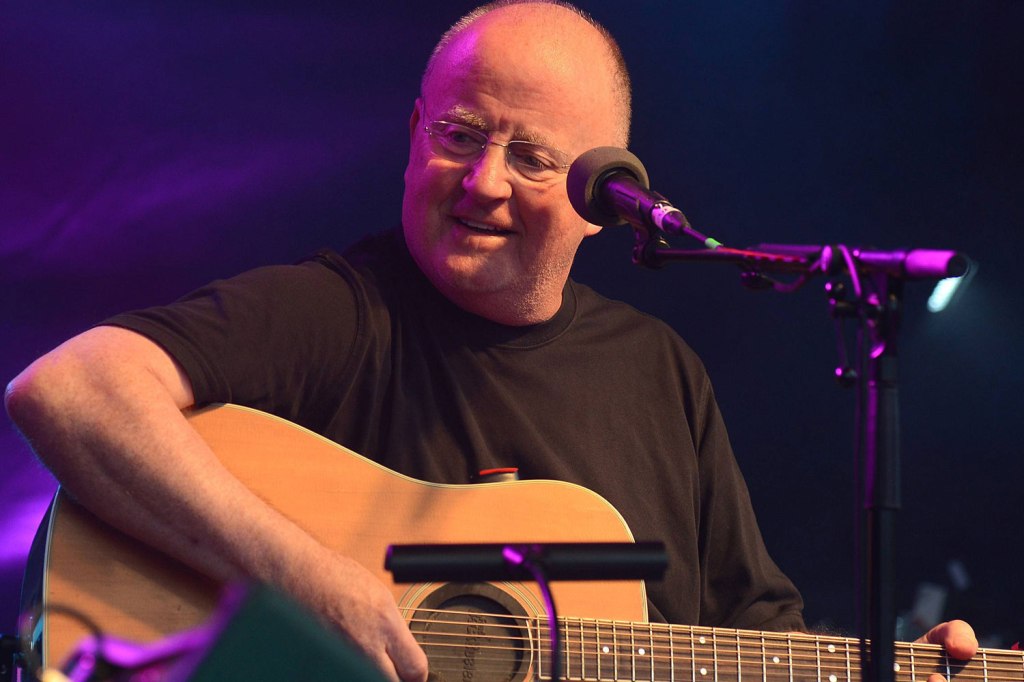
Christy Moore released “The Ballad of Ballinamore” in 1984 as a promotional single accompanying his album “Ride On”. It was subsequently included as “Ballinamore” in “The Box Set: 1964–2004
Song Details
Songwriter: Fintan Vallely
Place: Ballinamore and County Leitrim
Theme: Political satire, media portrayal, republicanism and local humour
Singer on this recording: Christy Moore
Recording:The Box Set: 1964–2004
Original release:The Ballad of Ballinamore, 1984
Video: Official recording provided to YouTube by Sony Music UK
“Lovely Corranmore” is an emigration song expressing a Leitrim exile’s longing for home. Its narrator recalls leaving from Sligo Bay to seek a living in America and contrasts the factories, lights and nightclubs of New York with the clean air, hills, homes and familiar faces of Corranmore.
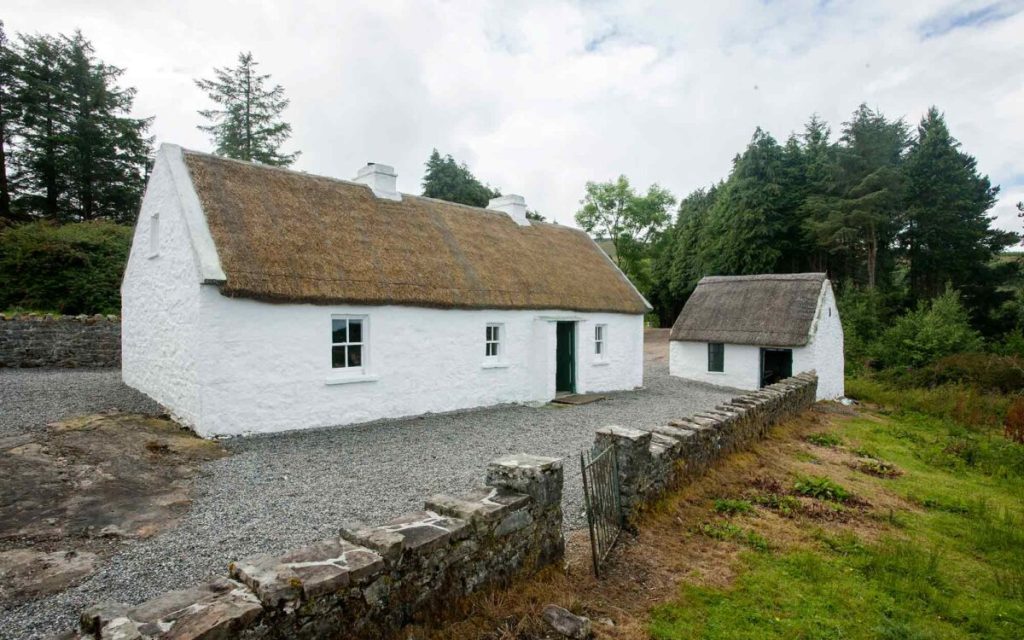
The final verse identifies Corranmore as the birthplace of Seán MacDiarmada, the Leitrim-born revolutionary and signatory of the 1916 Proclamation. MacDiarmada inspired numerous songs and poems, but the writer of “Lovely Corranmore” has not yet been identified.
The song was already in circulation by 1961, when Peggy Gilligan was recorded singing it in Drumshanbo. It was also recorded by the late Fermanagh singer Tommy McDermott and included on his album “In the Shadows of Sliabh Beagh”. The performance featured here was recorded when Tommy was 84 years old at the opening session of the Lisnaskea Traditional Music Weekend. of Aughavas, to commemorate the fiftieth anniversary of the Selton Hill Ambush.
Song Details
Songwriter: Unknown
Place: Corranmore, near Kiltyclogher, County Leitrim
Theme: Emigration, homesickness, place and Seán MacDiarmada
“Rossinver Braes”, also known as “The Lovely Melvin Side”, is a song of emigration and longing for home. Its verses praise the landscape and people of Rossinver and Lough Melvin, recalling Sheehan’s Mountain, Rossinver Cemetery, neighbouring houses filled with music and dancing, and the sound of the thrush and blackbird.
A version was preserved in the Schools’ Collection in the late 1930s. It was supplied by Terence Connolly, aged 66, of Larganhugh, Rossinver, and written down by Michael G. Hughes, principal teacher at Rossinver National School. The manuscript attributes the song to a deceased local writer whose name appears to read “Patrick Magee”. The surname is difficult to decipher and is transcribed on Dúchas.ie as “Uagle”, so the attribution should be treated with some caution.
The song remained in oral tradition. On 10 November 1971, collector Tom Munnelly recorded Morty Gilmartin of Blacklion singing it under the title “The Lovely Melvin Side”. That recording is now held in the National Folklore Collection’s Audio Collection.
Song Details
Songwriter: Patrick “Magee” (surname to be verified)
Place: Rossinver and Lough Melvin, County Leitrim
Theme: Emigration, landscape, courtship and longing for home
Archival sources: Dúchas Schools’ Collection and Audio Collection
Source singer: Morty Gilmartin, Blacklion, County Cavan
Recorded by: Tom Munnelly
Recording date: 10 November 1971
Audio reference: TM0019B.3
Roud number: 31673
Listen
Fionnuala Maxwell – Rossinver Braes / The Lovely Melvin Side
Fionnuala learned the song from the 1971 recording of Morty Gilmartin and supplemented it with a verse preserved in the Dúchas Schools’ Collection.
Adieu my native country boys must I leave you all behind And go and seek my fortune in some far and foreign clime To leave the land that gave me birth it grieves my heart full sore Adieu my old aged parents will I ever see you more
The grandeur of my native place it’s rare for to behold It’s brighter far than the morning star or a diamond set in gold For the glorious sun of a summer’s morn sends forth her glittering rays To enchant the scene that looks so grand round bold Rossinver’s braes
In the summertime when the fields are fine and the days are bright and clear The woods around with music sound to enlighten the wanderer’s ear It’s by the thrush and blackbird as they sit on their boughs with pride Singing the praise of Rossinver Braes and the lovely Melvinside
Adieu to Sheeaun Mountain and her subterranean caves Where the hare and sheep for shelter seek when the wintry winds do rage The boys and the girls in the summertime to this hill they’ll go with pride With the love in their eye as they pass by the lovely Melvinside
On a winter’s night when the moon shines bright and the stars do twinkle above It’s to some neighbour’s house we go to meet the girls with love We’ll sit and chat about this and that or dance a reel or slide Where e’er I roam I can find none like the girls on the Melvinside
Adieu Rossinver Cemetery, famed for it’s beautiful scene Its castle hall and crested wall clad o’er in ivy green There’s some patriot sons in tombs now lie who with fervour and with pride They once enjoyed a happy home near the lovely Melvinside
Sources & Credits
Words: Patrick Magee?
Performance and recording: Fionnuala Maxwell, Tom Munnelly, Morty Gilmartin
The Slopes of Selton Hill was written by the late Michael Whelan, historian and native of Aughavas, to commemorate the fiftieth anniversary of the Selton Hill Ambush.
On 11 March 1921, six IRA Volunteers were killed at Selton Hill, between Mohill and Fenagh, during one of the most tragic events of the War of Independence in County Leitrim. Michael’s ballad tells the story plainly and powerfully, preserving the names and memory of those who died.
The song has been sung by many Leitrim singers over the years and to several different airs. Michael was never overly concerned about which melody was used—the important thing to him was that the story continued to be told.
Song Details
Songwriter: Michael Whelan, Aughavas, County Leitrim
Place: Selton Hill, County Leitrim
Theme: War of Independence, loss, remembrance and local history
Singers on these recording: Fionnuala Maxwell, Mae Reynolds Malone, Stephen Flynn, Gerry Moran
Recorded by: Paul Gurney, Mike Mulvihill, Comhaltas, Tracey O’ Neill
Video: Produced for the Selton Hill centenary commemorations, 2021
Listen to four interpretations of The Slopes of Selton Hill, demonstrating how a locally composed ballad can pass between singers and acquire different melodies and styles.
On history’s page with pride we read of Leitrim’s fighting tale. Her manhood bold ’neath the green and gold did die for Gráinne Mhaol. But the boys who fought the Black and Tans and freedom’s cup did fill Were our noble sons who faced the guns ’neath the slopes of Selton Hill.
The chill March wind it was unkind as the column pushed along On an early dawn in twenty-one when the fight was raging strong. Mid Gorvagh hills, they stood to rest where their plans soon came to nil. For true ’tis said, they were betrayed ’neath the slope of Selton Hill.
’Tis five o’clock and the English guns have pinned them to the ground. Behind the house that sheltered them, Sean Connolly looks around. “They’re closing in around us, boys; break through this ring of steel. But some of us will fall today ’neath the slopes of Selton Hill.”
With rifles raised, the Reilly blazed, Jack Hunt was by their side. And Seamus Wrynn strode mid the din to stem the battle tide. But from the lane, the bullets’ rain did Baxter’s lifeblood spill. Ere the night wind sighed, Joe Beirne died ’neath the slopes of Selton Hill.
As the stars grew bright on that cold March night, the gallant Sweeney rose, And McPartland too had broken through from the death grip of his foes. While far away McDermott prayed and Guckian wept his fill For their comrades brave who died that day ’neath the slopes of Selton Hill.
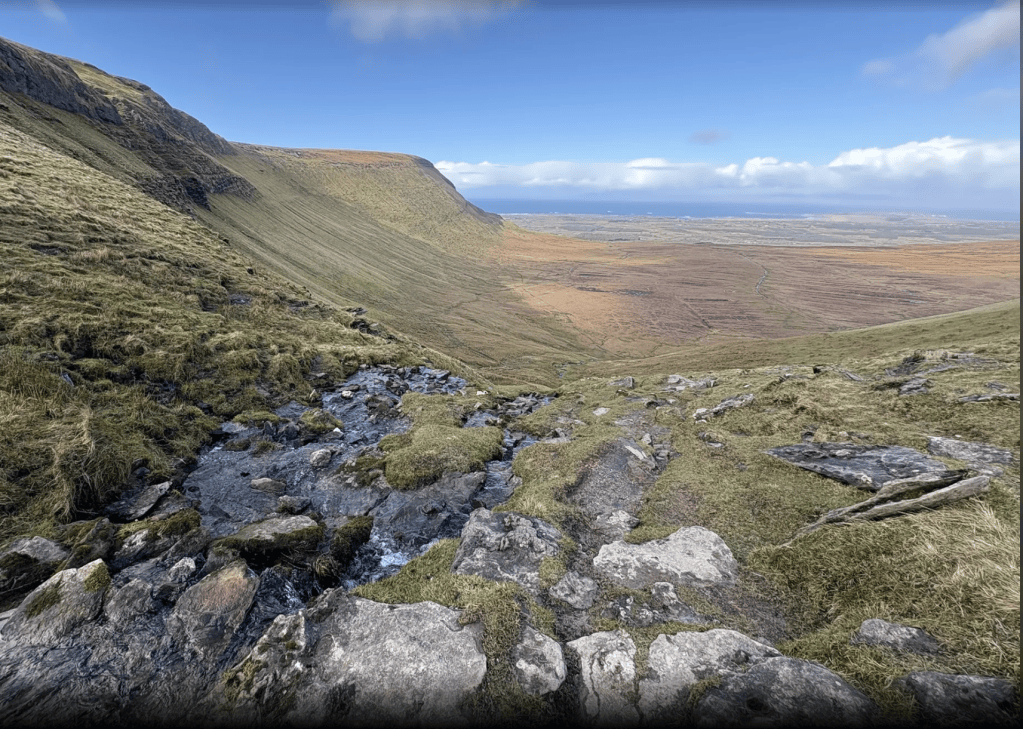
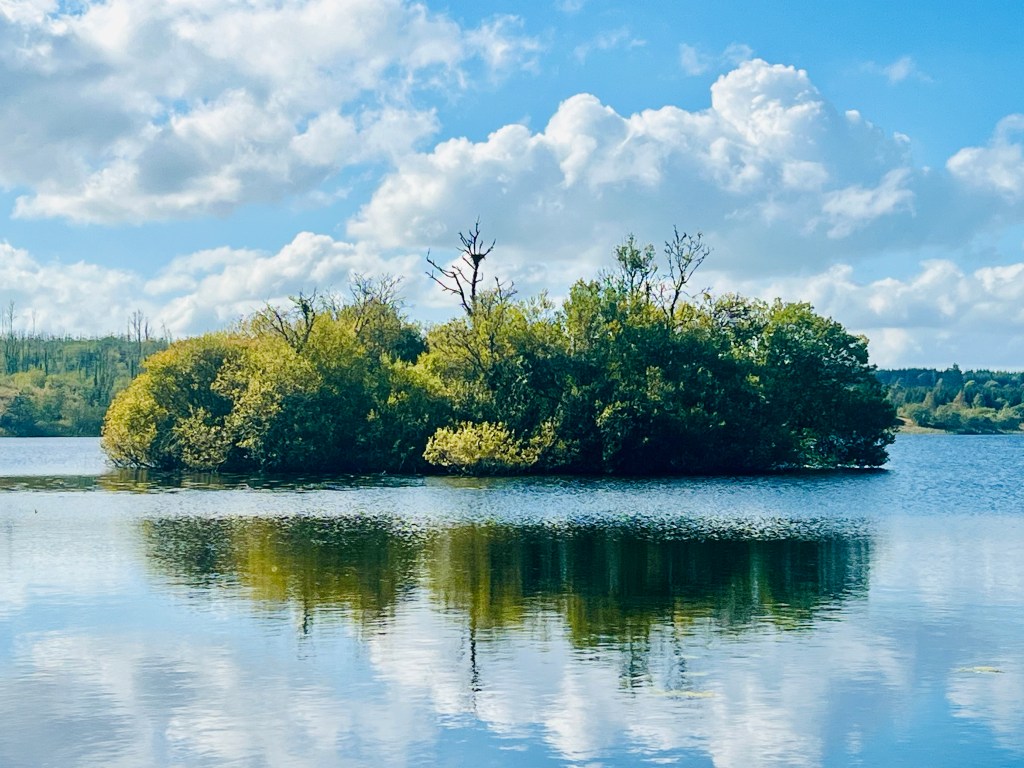
During The Leitrim Larks’ 2024 Heritage Week Song Tour, we stopped at Castlefore Lake to sing, admire the landscape and explore some of the area’s history. From the fifteenth century, Castlefore was associated with the O’Duigenan family, renowned historians and chroniclers involved in the writing of the Annals. It was also home to the O’Boy family. More than a century ago, William O’Boy drew inspiration from the locality when he wrote this ballad in praise of The Maid from Castlefore.
The words of the song are preserved in the Dúchas Folklore Collection. More recently, Fionnuala Maxwell recorded the song and created an accompanying video featuring scenes from Castlefore. Through The Leitrim Larks, she has taught it to singers from Ireland and further afield, and it has since been heard in the voices of American, Japanese and Irish participants—bringing William O’Boy’s local ballad into living circulation once again.
As I rode out on a summer’s morning as the day was dawning to take the air, I espied a damsel both fair and handsome and she advancing with her golden hair. I viewed her beauty with admiration, no other fair maid I do adore. If I don’t gain her, let none disdain her, she’s the blooming fair one from Castlefore.
Being a humble peasant, not educated, but captivated as you may see. I can’t describe her virgin beauty, without perusing on history. I read of Paris and chaste Diana and Cleopatra in the days of yore. I saw none can equal this matchless creature, she’s the blooming fair one from Castlefore.
Had Pharaoh seen her when in his glory, the Grecian queen he would despise. He’d never trample on king Menelaus nor give to Venus the golden prize. He’d collect his forces and cross the ocean and land the Trojans on Erin’s shore. He then would wander like the famed Leander to seek the grandeur of Castlefore.
Had the great O’Connell seen this fair lady when his monster meetings he carried on In different stations he’d challenge nations to find an equal for this lovely one. He’d call a meeting in this fair one’s honour where Saint Caillin’s banner does proudly soar. And spread her fame in the nation’s papers and circulate it around Castlefore.
Now to end my praises, I will spend my days in a silent stupor and a reverie. But to every maiden of virtue laden, I will not deny you my company. But I pray don’t envy this virtuous fair one, though once the pride of Erin’s shore. Although you’re a beauty be somewhat eclipsed by this blooming fair one from Castlefore.
Farewell Bornacoola is an emigration ballad written by Molly (Reynolds) Connor. In the tradition of many Irish emigration songs, it recalls scenes from the writer’s childhood around Bornacoola in south County Leitrim and laments the fact that so many local people had to leave home to make a living elsewhere. The song captures both the pain of departure and the lasting attachment emigrants retained to the people and places they had left behind.
Song Details
Songwriter: Molly (Reynolds) Connor
Place: Bornacoola, County Leitrim
Theme: Emigration, childhood and remembrance
Song type: Ballad
Singer on this recording: Fionnuala Maxwell
Recorded by: Fionnuala Maxwell
Earlier singer associated with the song: John/Seán Roche
The song was also known to have been sung by John (Seán) Roche, although no recording of his version has yet been located.
Lyrics
FAREWELL BORNACOOLA
Farewell Bornacoola, I’m lonely to leave you,
My thoughts will be with you wherever I go
For ‘twas there I was born and it’s there I would tarry,
In the fields where so sweetly the Rynn waters flow.
‘Twas there in the summer we strolled through the meadows
To Rynn where in plenty the blueberries grow.
On the heathery banks between Bor and Gortletteragh
We sat where so sweetly the Rynn waters flow.
‘Twas there we went fishing for perch, pike or cardy
Or swam in the river near the bridge down below.
We played on the alley or kicked the brown leather,
In the fields where so sweetly the Rynn waters flow.
From Dromod to Clooneen, through Rooskey’s wide arches,
There flows the broad Shannon to guard on the West,
Here Leitrim and Longford united forever,
Make proud Bornacoola as good as the best.
But thousands are leaving the homes of their fathers,
To seek fame or fortune wherever they go
They’ll never find any more kind or more friendly,
Than in old Bornacoola where the Rynn waters flow.
Sources & Credits
Words: Molly (Reynolds) Connor
Performance and recording: Fionnuala Maxwell
Research and contextual notes: Fionnuala Maxwell
Source: Meandering Through Bornacoola by Scully John and MacAodha, Donnchadh.
 The Leitrim Larks